
St. Maarten, Saint Martin sign treaty allowing cross-border maritime pursuit in anti-drug operations
Authorities from the Dutch and French sides of the island formalized a new step in cross-border law enforcement cooperation on Tuesday with the signing of a treaty allowing maritime “hot pursuit” during anti-drug trafficking operations in the waters surrounding Sint Maarten and Saint Martin.
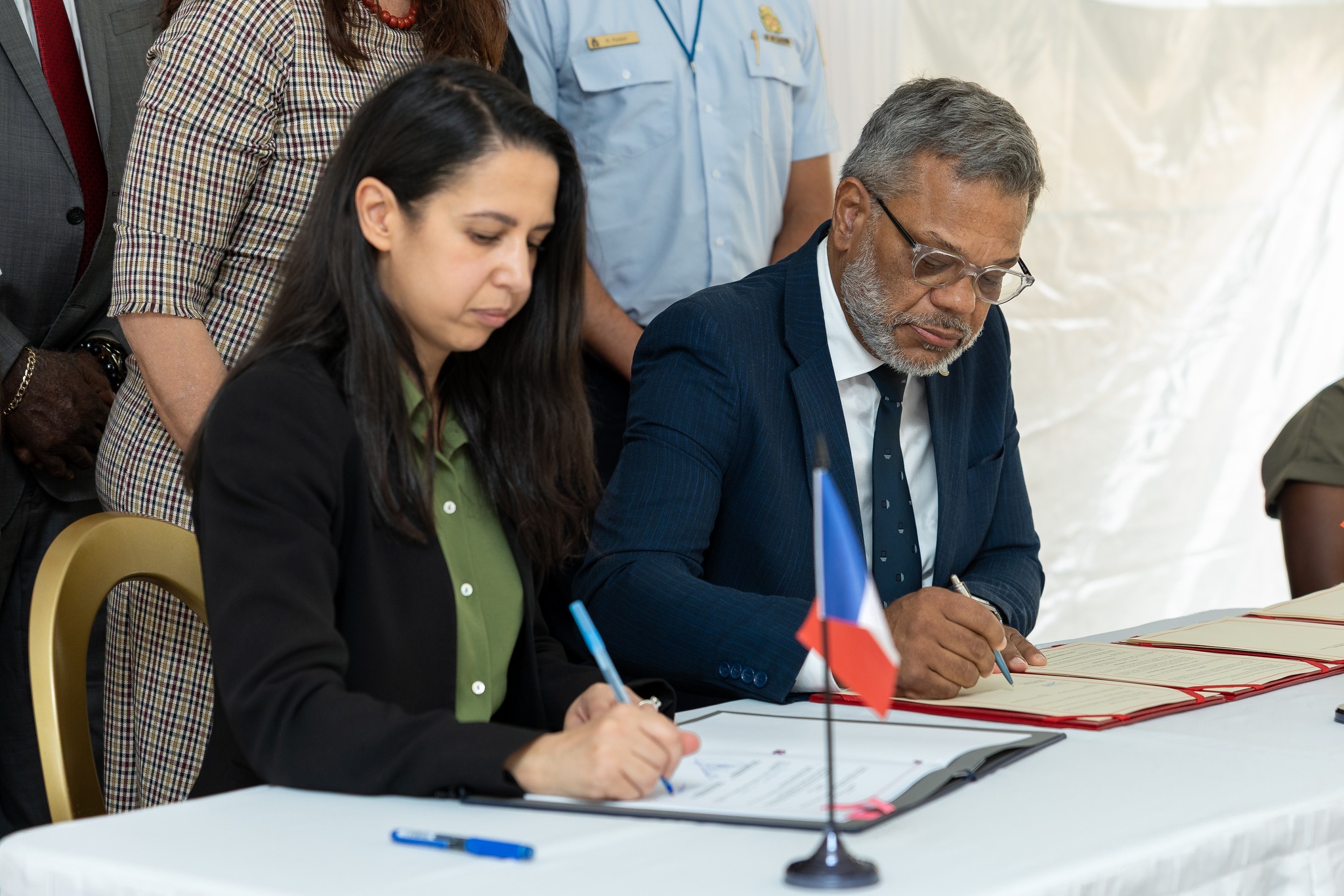
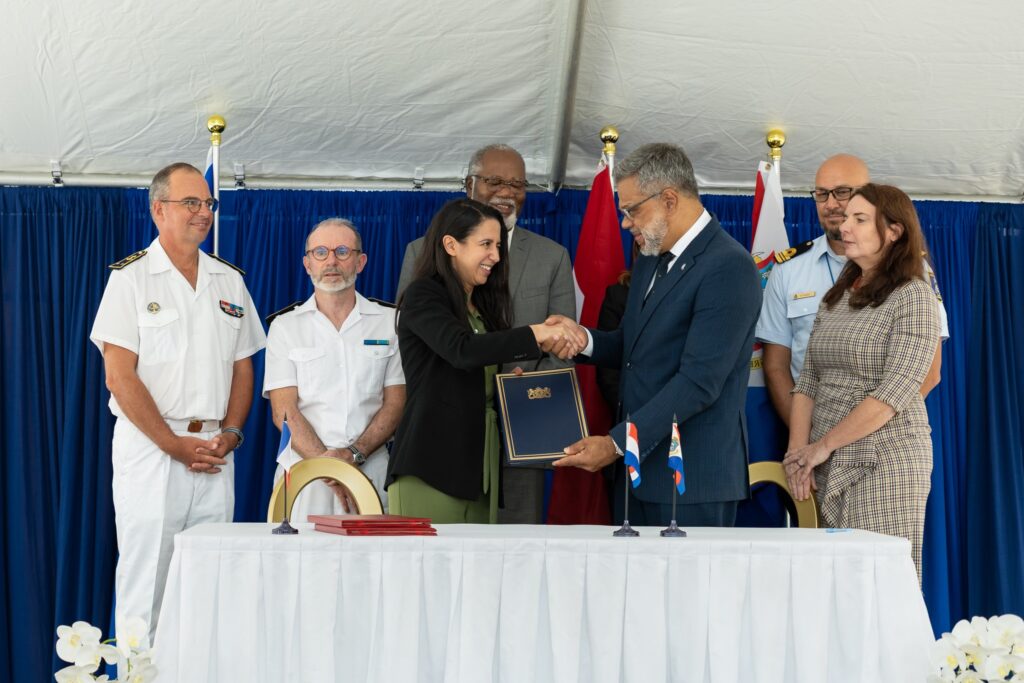
The agreement was signed at the police station in Cole Bay by Prime Minister Dr. Luc Mercelina and French Minister of Overseas Territories Naïma Moutchou. The ceremony brought together senior officials from both administrations and maritime law enforcement agencies.
Among those present were Governor Ajamu Baly, Justice Minister Nathalie Tackling, French state representative Cyrille Le Vély and President of the Collectivité of Saint Martin Louis Mussington.
Strengthening maritime law enforcement
The treaty, formally titled the agreement on “Hot Pursuit during Maritime Counter Drug Operations in the Vicinity of Saint Martin and St. Maarten,” establishes a legal framework allowing law enforcement vessels from either side of the island to continue pursuing suspected smugglers across maritime boundaries during anti-drug operations.
Under the arrangement, authorities will be permitted to enter each other’s territorial waters while actively pursuing vessels suspected of involvement in drug trafficking or other maritime crimes. The treaty also provides for enhanced operational cooperation, including the exchange of intelligence and coordination of surveillance activities.
Officials said the agreement closes a procedural gap that criminal networks have sometimes exploited by crossing from one jurisdiction into another during maritime pursuits.
Cooperation rooted in shared history
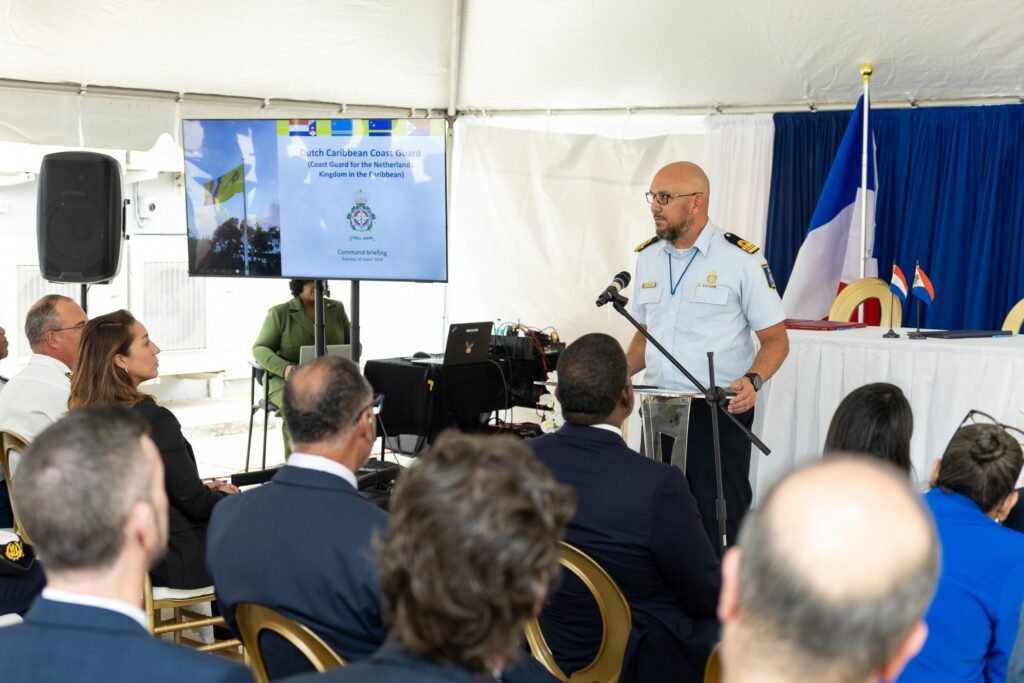
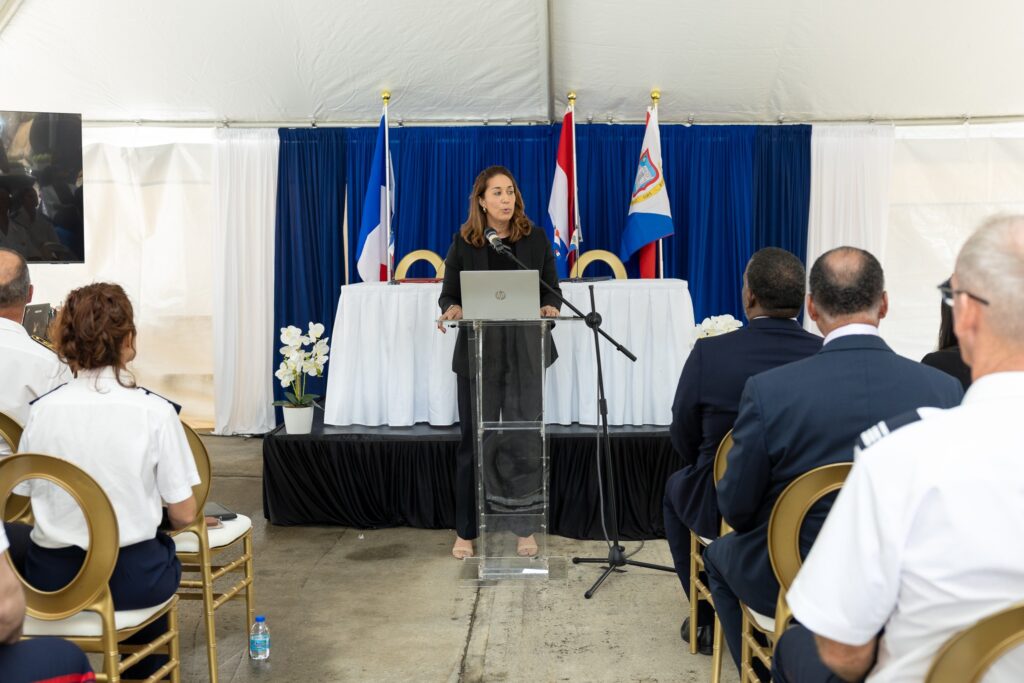
Justice Minister Tackling opened the ceremony by reflecting on the long history of cooperation between the French and Dutch sides of the island. She noted that the two nations have shared the island since the signing of the Treaty of Concordia in 1648, which established the peaceful coexistence of the French and Dutch communities on a single landmass.
“Two nations share one island where communities, economies and cultures have grown together across what is often an invisible border,” Tackling said.
The minister explained that the new agreement extends that longstanding cooperation into the maritime domain, where organized crime groups have at times attempted to exploit jurisdictional boundaries.
“This treaty closes a gap that criminals have too often relied upon,” she said.
Tackling also recognized the efforts of the institutions and professionals who helped bring the agreement to fruition, including the Dutch Caribbean Coast Guard and French maritime authorities whose daily cooperation at sea forms the foundation for agreements such as this one.
Mutual right of pursuit
Prime Minister Mercelina emphasized that the agreement represents more than a legal formality. “Today we formalize an important agreement between the Kingdom of the Netherlands and the Republic of France regarding the mutual right of pursuit during maritime counter-drug operations in the waters surrounding Saint Martin and Sint Maarten,” he said.
“This moment is more than a signing ceremony. It is a clear and powerful statement of cooperation, trust and shared responsibility.”
Mercelina pointed to the unique character of the island. “Our island is unique in the world—two nations, two systems, two administrations, yet one people living side by side on a single island,” he said. “That reality brings opportunities, but it also brings responsibilities.”
He stressed that cooperation between both sides is essential when it comes to protecting borders and combating transnational crime. “When it comes to safeguarding our communities and combating transborder crime, cooperation is not optional—it is essential,” he said.
Targeting maritime drug trafficking
The Caribbean region remains an important transit corridor for narcotics moving from South America toward markets in North America and Europe. Because of its location and busy maritime traffic, the waters surrounding St. Maarten and Saint Martin have long required intensive monitoring by law enforcement agencies.
High-speed vessels commonly known as “go-fast boats” are frequently used by smugglers to transport cocaine, marijuana and other illegal cargo across the region.
Authorities say these vessels often attempt to evade interception by crossing quickly between jurisdictions, which can complicate enforcement operations when pursuing vessels approach territorial boundaries.
The new treaty is intended to remove those obstacles by allowing law enforcement to maintain pursuit without interruption when crossing into the neighboring jurisdiction’s waters.
Broader justice cooperation
On Wednesday, during the Council of Ministers’ press briefing, Justice Minister Tackling referenced recent discussions with French authorities regarding prison infrastructure and justice sector reforms on both sides of the island.
During their visit to the Dutch side of the island, officials from France learned more about plans for a new correctional facility intended to modernize detention operations in St. Maarten.
According to Minister Tackling, such exchanges demonstrate the broader spirit of cooperation between the two administrations when it comes to justice and public safety. “Exchanges such as these are valuable as both sides continue to work together on matters related to justice and public safety,” Tackling said.
Symbolic moment for the island
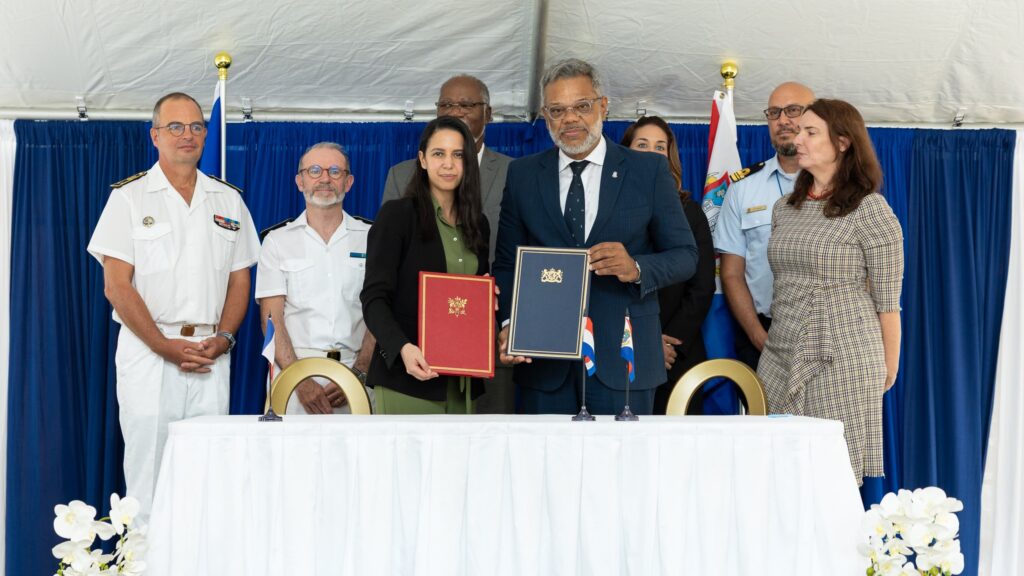
The treaty signing concluded with the formal exchange of documents between Mercelina and Moutchou, followed by a ceremonial toast attended by officials from both governments.
For authorities, the new treaty is expected to strengthen maritime security and reinforce the joint commitment to combat organized crime in the region. As Tackling summarized during the ceremony, cooperation between the two sides of the island remains essential. “For an island that shares one landmass and one maritime space,” she said, “working together is not optional—it is necessary.”