Joanna Kazana, United Nations, Beyond GDP, Aruba, Curaçao, Sint Maarten, Dutch Caribbean, Small Island Developing States, Climate Change, Development Finance
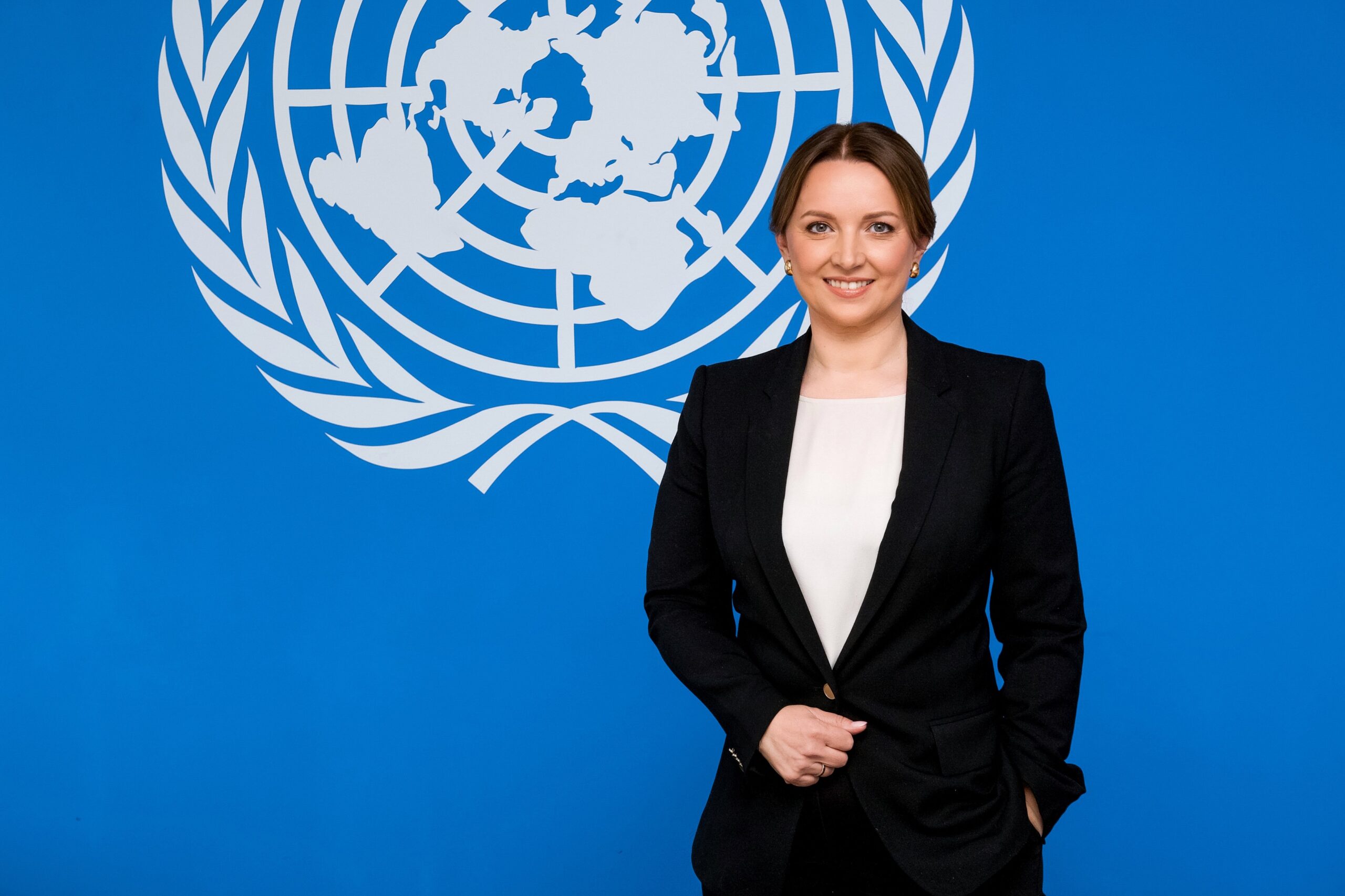
By UN Resident Coordinator, Joanna Kazana
On a clear morning in Aruba, the water off Eagle Beach glimmers in colors that no photograph fully captures -- turquoise fading into cobalt, coral gardens visible from the surface, a living treasury built over millennia. In Curaçao's Willemstad, a UNESCO World Heritage harbor reflects the resilience and cultural richness of a people who have made something extraordinary from very little land. In Sint Maarten, Pelican Hill offers breathtaking ocean views. You can sit there and take in the unparalleled beauty of sunrise and sunset or watch the bay where cruise ships and small boats bring enchanted tourists every day.
The problem is, neither natural beauty nor these manmade wonders appear in either country's GDP.
That is the central paradox confronting Aruba, Curaçao and Sint Maarten, three Caribbean nations and constituent countries of the Kingdom of the Netherlands. Since all three are classified as high-income economies, their GDP metrics exclude them from thresholds that determine eligibility for concessional financing, climate adaptation funds, and development assistance. By the standard arithmetic of national accounting, each looks like a success story. The trouble is that this arithmetic captures almost none of the other economic, environmental and cultural factors that matter most.
The Tyranny of a Single Number
The United Nations Secretary-General's High-Level Expert Group on Beyond GDP, which released its report Counting What Counts in May 2026, made the problem clear: GDP measures economic output but ignores how income is shared, leaves out the non-market value, and even counts some harms as growth. The report is the first UN-level framework developed at Member States' request to complement GDP with a broader set of progress indicators, covering well-being, equity, sustainability and resilience. The logic applies with particular relevance to Small Island Developing States, and nowhere more urgently than in the Dutch Caribbean.
Consider the scale at stake. Together the three islands are home to fewer than half a million people - roughly 108,000 in Aruba, some 150,000 in Curaçao and around 41,000 in Sint Maarten, yet each is classed among the wealthiest economies in the Caribbean on a per capita basis. That prosperity is recent and narrowly built: Aruba’s population has more than doubled since 1950, drawn in by the tourism economy that now underpins its high-income status. The same dependence leaves these islands acutely exposed. When Hurricane Irma struck Sint Maarten in September 2017, it damaged some 90 percent of the island’s infrastructure and inflicted damage and losses of about US$1.38 billion. On an annual basis, the economy contracted by roughly 12.5 percent. In a matter of hours, more than a year’s worth of national output was swept away.
Vulnerabilities Without a Voice
The risks facing these islands are deep and, critically, not of their own making. The most pressing is climate change, a crisis driven overwhelmingly by the emissions of large industrialized countries. Those emissions have warmed the Atlantic, intensified hurricanes, bleached coral reefs, and raised sea levels. Aruba, Curaçao and Sint Maarten's contribution to global greenhouse gas emissions is negligible. Yet they face the consequences directly and are then deemed by the rules of international finance to be ‘too wealthy’ to receive help.
Natural Wealth That Goes Unmeasured
The Beyond GDP framework's focus on natural capital captures something vivid and irreplaceable in these islands. Curaçao's coral reefs are among the healthiest in the Caribbean. Aruba's coastlines support species found nowhere else on Earth. The waters around Sint Maarten are a breeding ground for migratory species that feed fisheries across the wider region. These are genuine treasures, ecological, cultural and economic at the same time, and they are the foundation of the tourism that generates the GDP numbers which then bar these islands from accessing support.
These environmental assets are also under serious threat from climate change, pollution and coastal development - precisely the pressures that a broader lens for evaluating eligibility for development financing would flag as requiring urgent action.
A Question of Justice
There is a fundamental fairness issue here that the international community has not yet honestly addressed. The idea that those who cause a problem should help fix it is a basic principle of both law and the principles of social justice. The emerging global framework on loss and damage from climate change acknowledges this. But the rules governing development finance still use income classifications as a stand-in for need; classifications designed for a different purpose, which routinely shortchange small island states whose headline income figures hide real fragility.
The Beyond GDP process, now before the UN General Assembly, is a real opportunity for reform. As member states negotiate new frameworks for measuring progress, the specific situation of high-income small island states must be directly addressed. These islands are paying for emissions they did not produce, and the global measurement system should finally say so.
A New Compass, Not a Higher Bar
The Secretary-General's expert group was right: what we measure shapes what we value. For too long, the international system has measured Aruba, Curaçao and Sint Maarten by a single number that flatters while it blinds. It registers hotel revenues but not hurricane exposure. It counts services output but not reef degradation. It records tourism spending but not desalination costs, demographic decline, migration pressure, or the accelerating sea level rise.
These islands deserve to be seen whole. Their high-income status must not be used to deny them the sustained support they are rightfully owed; support that is, in any honest reading, compensation for damage they did not cause.
The coral gardens of the Curaçao shelf, the turquoise waters of Aruba's leeward coast, the fishing grounds around Sint Maarten - these are not decorative footnotes to a development story. They are the story. It is time our metrics learned to count them.